




There is always something trending online. A new audio takes over Instagram, a particular editing style starts appearing on every Reel, a meme becomes the internet’s favourite joke, and suddenly brands across different industries are using the same format to promote their products and services.
For brands, trends can feel like an easy opportunity to get noticed. They offer a way to participate in conversations, reach new audiences, and make content feel current. But there is a difference between being relevant and constantly trying to stay relevant.
When every brand starts following the same trends, it becomes harder to stand out. Worse, when a trend has nothing to do with the brand’s identity, its participation can feel forced, confusing, or simply out of place.
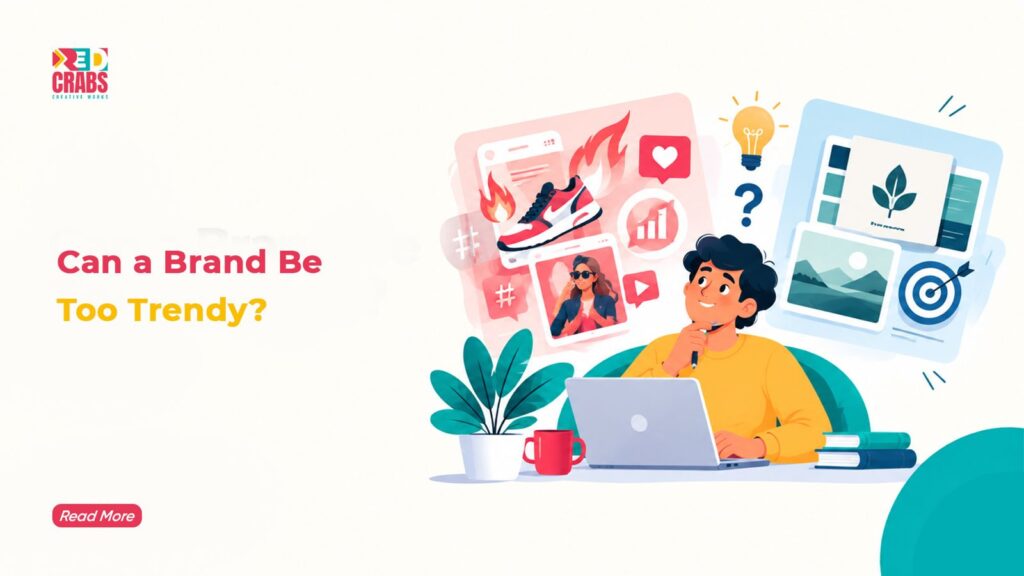
So, can a brand actually be too trendy? Absolutely. The challenge is not avoiding trends altogether. It is knowing which ones deserve your attention and which ones are better left alone.
Why Brands Feel the Pressure to Follow Every Trend
Social media has made trends move faster than ever. Something that gains popularity in the morning can appear on hundreds of brand accounts by the evening. Marketing teams often feel pressured to react quickly because they do not want to miss an opportunity for visibility.
There is also the attraction of easy engagement. A trending audio, relatable meme, or popular format can sometimes help a post reach people beyond the brand’s existing audience. For businesses trying to grow their social media presence, that possibility is tempting.
According to the 2025 Sprout Social Index, 93% of consumers surveyed said it was important for brands to keep up with online culture. However, the same research found that 33% considered it embarrassing when brands jumped on viral trends, showing that audiences also notice when participation feels forced. (Source: Sprout Social, 2025 Social Media Index)
This creates an interesting challenge for marketers. Audiences want brands to understand what is happening online, but they do not necessarily want every brand to imitate whatever is popular.
The goal should be cultural awareness, not constant imitation.
When Following Trends Starts Affecting Brand Identity
Every brand has certain characteristics that make it recognisable. Its tone of voice, visual identity, communication style, values, and overall personality contribute to how people remember it.
But when brands start changing their communication style every time a new trend appears, that recognition can become difficult to maintain.
Imagine a premium skincare brand that usually communicates through clean visuals, educational content, and expert-led information. Suddenly, it starts posting exaggerated memes and using every viral audio simply because other brands are doing it.
A little humour may make the brand more relatable. However, if the content feels completely disconnected from its usual personality, audiences may struggle to understand what the brand actually stands for.
The same applies to a financial services company, healthcare institution, educational organisation, or technology business. These brands can certainly experiment with creative formats, but their communication still needs to reflect the trust and credibility they want to build.
A strong brand marketing strategy gives a business enough flexibility to participate in current conversations without losing its identity. Trends should influence how a brand communicates, not completely change what the brand represents.
The Difference Between Being Relevant and Being Trendy
Being trendy and being relevant may sound like the same thing, but they serve different purposes.
Being trendy means participating in what is currently popular. Being relevant means understanding what matters to your audience and finding meaningful ways to connect with it.
For example, a healthcare brand could use a trending audio to create a light-hearted Reel about common health misconceptions. The trend makes the content familiar, while the information gives the audience something useful.
A technology company could use a popular visual format to explain a complicated product feature. A restaurant could participate in a food trend while showing how its own menu offers something different.
In each case, the trend supports the message instead of becoming the entire message.
Google recommends using Google Trends to understand search interest and inform content strategy, while also ensuring that topics align with the website’s overall purpose and audience needs rather than being chosen simply because they are trending. (Source: Google Search Central, Get Started with Google Trends)
That is an important distinction. A trend can help a brand become part of a conversation, but relevance is what makes that conversation worth having.
Why Trend-Driven Marketing Can Backfire
Trend-driven marketing can generate attention, but attention alone does not guarantee a positive brand experience.
There are several ways trend participation can go wrong.
1. The trend does not match the brand
Not every trend is suitable for every business. A joke that works for an entertainment brand may not work for a hospital or financial services company. Using a trend without considering the context can make the communication feel inappropriate or disconnected.
2. Everyone is creating the same content
When multiple brands use the same audio, meme, or creative format, audiences begin seeing similar posts repeatedly. Instead of standing out, your brand becomes one more account participating in the same conversation.
3. The content gets attention but no meaningful response
A Reel may receive thousands of views because the audio is popular, but that does not automatically mean people understand the brand, remember its services, or become interested in its products.
4. The brand becomes dependent on trends
When every content idea depends on what is currently viral, the brand may struggle to create original content. Marketing becomes reactive rather than strategic, and there is less room for long-term storytelling.
5. The timing is wrong
Trends often have short lifespans. By the time a brand gets approvals, designs the creative, records the video, and publishes it, the conversation may already have moved on. Sprout Social’s 2025 research found that 27% of consumers surveyed felt trend participation was effective only within the first 24 to 48 hours of a trend’s lifespan. (Source: Sprout Social, 2025 Social Media Index)
The takeaway is simple: a trend should never become the only reason behind a piece of content.
How to Decide Whether a Trend Is Right for Your Brand
Before jumping on a trend, it helps to pause and evaluate whether it actually fits your business. A few simple questions can make the decision easier.
Does it match your brand personality?
If your brand has a professional, informative, or premium identity, the trend should complement that personality. You do not need to change your entire communication style just to participate.
Will your audience understand it?
A trend may be popular among a particular online community but completely unfamiliar to your target customers. Think about whether your audience will find it relatable, useful, or entertaining.
Can you connect it to your product or service?
The strongest trend-based content usually has a natural connection to what the brand offers. If you have to force a product mention or add an unrelated promotional message, the idea may not be worth pursuing.
Does it add anything to your content?
Ask whether the trend helps communicate an idea better. If removing the trending audio or format leaves you with nothing meaningful to say, it may not be a strong content idea.
Is it appropriate for your industry?
Some trends involve humour, sensitive subjects, cultural references, or controversial conversations. Consider the context before associating your brand with them.
These questions help businesses move away from automatic trend participation and towards more thoughtful content decisions.
Original Content Should Still Be the Foundation
Trends can help brands stay connected to online culture, but original content gives people a reason to remember them.
Think about the brands you genuinely enjoy following. It is probably not just because they use trending audio. It may be because they share useful information, have a distinctive personality, communicate consistently, or offer a perspective you do not find everywhere else.
Original content can take many forms. It could be behind-the-scenes videos, customer stories, expert opinions, product demonstrations, educational posts, industry insights, or conversations with the people behind the business.
Sprout Social’s 2025 research found that approximately half of consumers surveyed said original content was what made their favourite brands stand out on social media. (Source: Sprout Social, 2025 Social Media Index)
This is why brands should invest in developing content that reflects their own experiences, expertise, and personality.
A trend might help someone discover your account, but original content gives them a reason to stay.
How to Balance Trends With a Long-Term Brand Marketing Strategy
The answer is not to stop following trends. It is to give them the right place in your overall marketing plan.
A practical approach is to divide content into three broad categories.
1. Brand-led content
This is the content that communicates what your brand stands for. It includes your services, products, expertise, values, customer experiences, and key messages. It should form the foundation of your communication.
2. Audience-led content
This focuses on the questions, interests, challenges, and experiences of your target audience. Educational posts, FAQs, customer stories, and useful industry information can help build stronger relationships.
3. Trend-led content
This is where relevant viral formats, popular audio, memes, and current conversations come in. It adds variety and gives the brand opportunities to participate in online culture without making trends the centre of every campaign.
The exact balance will depend on the business and its audience. The important thing is to ensure that trend-led content supports the brand rather than replacing its core communication.
For example, a business might use a trending Reel format to introduce a service, but follow it with an informative carousel explaining the service in more detail. This way, the brand gets the creative benefit of the trend while still communicating something valuable.
What Should Brands Measure Beyond Views and Likes?
One of the biggest reasons brands continue chasing trends is the immediate visibility they can generate. A post gets more views than usual, the engagement numbers look encouraging, and the team considers it a success.
But what happens after that?
Did people visit the profile? Did they explore the website? Did they enquire about the product or service? Did the content improve brand recognition? These are equally important questions.
Instead of evaluating trend-led content only through views and likes, brands should consider:
- Reach: Did the content introduce the brand to new people?
- Engagement: Did people genuinely interact with the post?
- Profile visits: Did the content make viewers interested in learning more?
- Website traffic: Did it encourage people to explore the brand further?
- Enquiries and conversions: Did it contribute to actual business interest?
- Audience quality: Did it reach people who are relevant to the brand?
A trend that generates moderate views but attracts the right audience may be more useful than a viral post that brings attention without any meaningful connection to the business.
The purpose of performance tracking is to understand what contributes to business goals, not simply identify which post received the highest numbers.
How an Online Marketing Agency Can Help Brands Stay Relevant
Keeping up with trends is easy when you are scrolling through social media every day. Knowing which trends are worth using, how to adapt them, and when to skip them requires a more strategic approach.
An experienced online marketing agency can help businesses identify opportunities that align with their audience and brand positioning. This involves more than finding trending audio or creating viral-style Reels. It requires understanding the brand, planning relevant content, maintaining consistency, and evaluating performance.
At RedCrabs Creative Works, the focus should be on creating marketing communication that has a purpose. Trend-led content can be part of the creative process, but it should work alongside brand storytelling, content planning, social media management, and campaign strategy.
Businesses looking for the Best Digital Marketing Services should look beyond the number of posts an agency can publish or how quickly it can recreate a trend. The real value lies in developing a strategy that connects creativity with business objectives.
A brand does not need to participate in every online conversation to remain visible. It needs to contribute to the conversations that make sense for its audience and identity.
The Bottom Line: Be Relevant, Not Just Trendy
Trends will continue to change. Today’s popular audio will eventually disappear, viral formats will be replaced, and new conversations will take over social media.
But a brand’s identity should not change every time the internet finds something new to talk about.
The brands that build stronger connections are not necessarily the ones that participate in every trend. They are the ones that understand their audience, communicate consistently, and know when a trend can add value to their message.
A thoughtful brand marketing strategy gives businesses the freedom to experiment without losing their identity. It allows them to stay current while continuing to build something recognisable and meaningful.
So, before your brand jumps on the next viral trend, ask one question: Does this actually make sense for us?
Because being part of every trend might get you noticed for a moment. Being recognisable for the right reasons is what makes people remember your brand.
Looking to build a brand that stays relevant without losing its identity? Connect with RedCrabs Creative Works for thoughtful content, creative campaigns, and digital marketing strategies built around your business goals. Get in touch with RedCrabs.