




Sometimes a Purchase Is Really a Statement About Who We Want to Be
A person walks into a store looking for running shoes and leaves with a pair that costs twice as much as the basic option. Someone buys a particular coffee even though there are cheaper cafés nearby. A student chooses one university over another because of what they imagine their life will look like after graduation. Someone upgrades to a newer phone even though the previous one still works perfectly well.
At first glance, these look like product decisions.
But sometimes the product is only part of the decision.
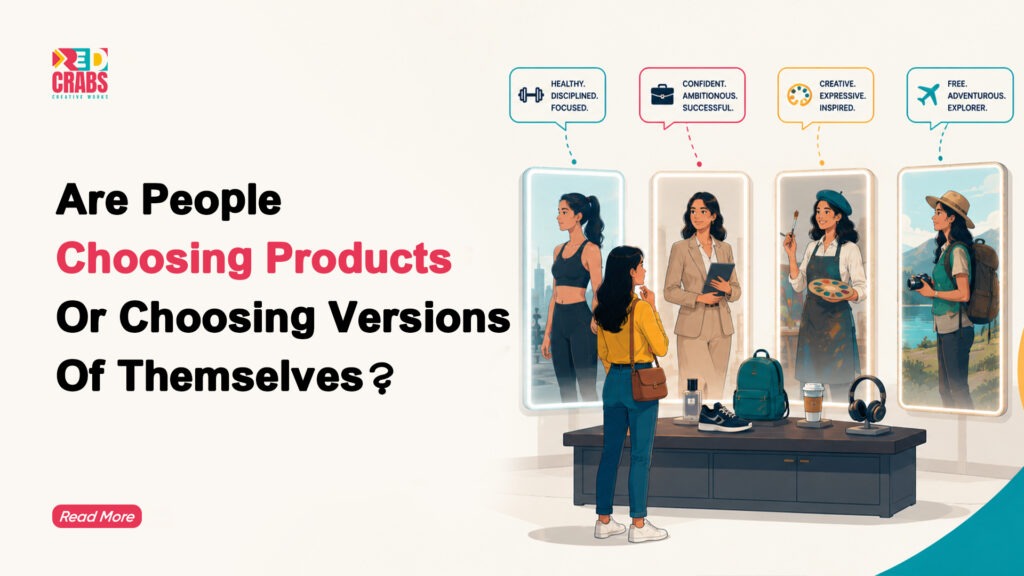
People often buy things because of what those things allow them to express about themselves. The product can represent ambition, taste, independence, success, creativity, health, belonging, sophistication, or the kind of person someone wants to become.
That is where Consumer psychology becomes particularly interesting for marketers. People do not always choose products based only on function. They also choose products based on identity.
The question is therefore not always, “What does this product do for me?”
Sometimes it is, “What does choosing this product say about me?”
We Buy for the Person We Are Becoming
Think about the first expensive purchase someone makes after getting their first well-paying job. It may be a watch, phone, car, laptop, holiday, wardrobe upgrade, or a dinner at a restaurant they previously considered too expensive.
The purchase may have practical value, but there is often something else happening.
It marks a transition.
“I can afford this now.”
“I have worked hard for this.”
“This is the life I wanted.”
The product becomes a small symbol of progress.
This is one of the reasons aspirational brands can be so powerful. They do not simply show customers what the product looks like. They show a version of life that the customer can imagine entering.
A premium watch is not only about telling time.
A fitness brand is not only selling workout clothes.
A luxury car is not only providing transportation.
A university is not only providing classes.
A café is not only selling coffee.
The product can become part of a person’s personal story.
Identity Often Sits Behind the Purchase
People carry multiple identities at the same time.
Someone can be a professional, parent, friend, entrepreneur, student, athlete, traveller, creator, or music lover depending on the situation. Different products become relevant to different versions of that person.
A person might dress very differently for work than they do when meeting friends. They may use one type of technology professionally and another because it reflects their personal interests. They may choose a particular restaurant because it fits the version of themselves they want to present in a social setting.
This makes consumer behaviour more complicated than simply understanding demographics.
Two people of the same age and income can make completely different purchases because they are expressing different identities.
That is why Identity-driven marketing focuses less on saying, “This product is for people aged 25 to 35,” and more on understanding what those people are trying to become, express, protect, or belong to.
Why People Sometimes Pay More for Meaning
Price becomes easier to understand when you look at identity.
A product can be objectively similar to a cheaper alternative and still command a premium because customers attach additional meaning to it.
The extra amount may represent design, craftsmanship, status, convenience, community, sustainability, expertise, or simply the feeling of owning something that fits the person’s identity.
This is not necessarily irrational.
Consumers are not buying in a laboratory.
They are buying in real life, where social context and emotional meaning matter.
Someone buying an expensive pair of sneakers may know that a cheaper pair would also work perfectly well. But the more expensive pair might make them feel more confident, align with their personal style, or connect them to a community they identify with.
The functional difference may be small.
The symbolic difference may feel significant.
This Is Why Certain Brands Become Part of People’s Personalities
Some brands become so closely associated with identity that people use them to communicate who they are without explaining themselves.
A person carrying a particular type of bag, wearing a certain brand of shoes, choosing a specific phone, visiting a certain kind of café, or driving a particular car may be communicating something to the people around them.
The brand becomes a social signal.
This does not mean every consumer consciously thinks, “I am buying this to signal my identity.” Most of the time, the process is much less deliberate.
People simply choose things that feel like them.
That is what makes Consumer psychology so important. Much of consumer behaviour happens through associations, emotions, habits, and mental shortcuts rather than carefully calculated decisions.
Social Media Has Made Identity More Visible
Social media has added another layer to this.
People are no longer only consuming products privately. They are constantly documenting experiences, purchases, outfits, restaurants, holidays, workspaces, books, workouts, and routines.
That means consumption can become part of personal storytelling.
A café visit becomes a story.
A holiday becomes a carousel.
A new laptop becomes part of a desk setup.
A gym routine becomes content.
A book becomes part of a reading list.
A restaurant becomes a recommendation.
The product is no longer only being consumed.
It is being communicated.
This is one reason certain products perform particularly well on social platforms. They give people something that fits naturally into the identity they are already presenting online.
Hyderabad’s Café Culture Makes This Very Obvious
Look at the premium café culture around Banjara Hills and Jubilee Hills.
There are plenty of cafés with beautiful interiors, carefully designed menus, photogenic dishes, curated music, stylish furniture, and spaces that look made for social media. But people do not necessarily visit all of them for the same reason.
One café might attract people who want a quiet place to work.
Another might become a weekend brunch destination.
Another might feel like the place to meet friends.
Another might be associated with dates or celebrations.
Another might simply be somewhere people want to be seen.
The coffee may be excellent in all of them.
But the identity attached to each experience can be completely different.
This is a useful lesson for brands because it shows that consumers are often choosing an environment that reflects the version of themselves they want to experience.
The café becomes part of the story.
The Same Thing Happens With Education
Education is another powerful example because the decision is rarely only about the course itself.
A student choosing a university may consider curriculum, faculty, fees, infrastructure, placements, location, and facilities. But there can also be a deeper question underneath all of those factors:
“Who will I become if I study here?”
A university can represent independence, professional ambition, social exposure, prestige, belonging, or a pathway to a particular career.
Parents may evaluate the same institution through a completely different identity lens. For them, the choice may represent responsibility, security, and giving their child a strong future.
The institution is the same.
The identity attached to the decision is different.
That is why education marketing that only lists facilities can feel flat. People are not simply buying classrooms and courses. They are imagining a future.
Healthcare Has an Identity Dimension Too
Healthcare may seem like the opposite of identity-driven consumption because medical decisions are often highly functional and serious.
But identity still influences how people perceive healthcare brands.
People may choose a hospital because they associate it with being modern, trusted, advanced, family-oriented, accessible, or premium. A patient may feel more comfortable with a doctor whose communication style aligns with how they see themselves and what they value.
Even preventive healthcare can be connected to identity.
Someone who identifies as health-conscious may be more receptive to regular screenings. Someone who sees themselves as an active person may be more motivated by fitness-related healthcare communication. Someone caring for elderly parents may respond more strongly to messaging around responsibility and family wellbeing.
The medical need may be similar.
The emotional framing can be different.
This Is Where Identity-Driven Marketing Becomes Useful
Identity-driven marketing does not mean inventing an artificial personality for the customer. It means understanding the identities, aspirations, values, and social contexts already influencing their decisions.
Instead of asking only:
“Who is our customer?”
A brand can ask:
“Who does our customer believe they are?”
“Who do they want to become?”
“What do they want other people to see?”
“What kind of community do they want to belong to?”
“What would make them feel that this product fits their life?”
Those questions can completely change the creative direction.
A fitness brand may stop talking only about calories and start talking about consistency and confidence.
A financial brand may move beyond returns and talk about independence and future security.
An education brand may move beyond facilities and talk about the person students can become.
A travel brand may move beyond destinations and talk about discovery and freedom.
The product remains the same.
The meaning changes.
Personal Branding Works on the Same Psychology
This becomes even more obvious when we look at Personal branding.
Why do people follow certain founders, creators, professionals, or experts when there are thousands of others offering similar information?
Often, it is not only because of what they know.
People also connect with how they think.
A strong personal brand communicates expertise, but it also communicates personality, values, worldview, experience, and ambition. Over time, audiences begin to associate the person with a particular way of approaching problems.
This is why personal branding cannot simply mean posting frequently on LinkedIn or Instagram.
Posting creates visibility.
A recognisable perspective creates a personal brand.
A founder who consistently talks about building sustainable companies will create a different identity from one who constantly discusses rapid growth. A marketer who focuses on consumer psychology will develop a different association from someone known primarily for performance advertising.
The content becomes evidence of the identity.
People Follow People Who Help Them See Themselves Differently
One reason personal brands can be so powerful is that audiences often use other people as reference points for their own aspirations.
A young professional may follow a founder because they represent the career they want.
A student may follow a creator because they have achieved something the student hopes to achieve.
A fitness creator may represent the lifestyle someone is trying to build.
A business leader may become influential because people do not simply want their advice. They want to understand how that person thinks.
This is where Personal branding overlaps with identity-driven marketing.
The audience is not only asking, “What can I learn from this person?”
They are also asking, consciously or unconsciously:
“Could I become more like this?”
Brands That Understand Identity Do Not Have to Sell So Hard
When a product fits strongly into a customer’s identity, marketing can become less dependent on constant persuasion.
The customer already understands why it belongs in their life.
This is why communities can be so powerful. People do not simply buy products. They join groups of people who share similar interests, values, ambitions, or lifestyles.
Think about running communities, gaming communities, luxury car communities, fitness groups, creator communities, or even communities built around specific cafés and restaurants.
The product creates the entry point.
The community creates belonging.
Once belonging becomes part of the experience, switching brands can feel like more than switching products.
It can feel like leaving a group.
But Identity Marketing Can Also Go Wrong
There is a danger in trying too hard to tell people who they are.
If a brand’s communication feels forced, stereotypical, or overly aspirational, customers can immediately sense the disconnect.
Not every young professional wants to be portrayed as someone drinking expensive coffee while working from a laptop. Not every parent responds to emotional family imagery. Not every ambitious person wants luxury as a symbol of success.
People are more complicated than marketing personas.
Good Consumer psychology therefore requires observation rather than assumptions.
The goal is not to decide who customers are and force them into a category. It is to understand the different motivations that influence them and recognise that those motivations can change depending on the situation.
We See These Patterns Across the Industries We Work With
We have worked with an array of industries, including healthcare, education, insurance, real estate, technology, and consumer-focused businesses. What that experience has shown us is that customers rarely interact with a brand in a completely rational vacuum. There is almost always a personal context behind the decision.
A healthcare decision can be about responsibility.
An education decision can be about ambition.
An insurance decision can be about protecting the people someone loves.
A real estate decision can be about stability or achievement.
A technology purchase can be about productivity, creativity, or professional identity.
The product is important, but the personal meaning around it often determines how strongly someone connects with the brand.
At RedCrabs, working across these different categories has helped us look beyond basic demographics and think about the motivations behind the audience. The strongest campaigns are usually the ones that understand not only what people need, but what that need represents in their lives. That is where Best Digital Marketing Services should move beyond targeting and start connecting brands with the identities and aspirations that actually influence decisions.
The Product Is Sometimes the Shortcut to a Bigger Goal
This is perhaps the most important distinction.
People rarely wake up thinking about products.
They wake up thinking about their lives.
They want to feel healthier.
They want to feel successful.
They want more freedom.
They want security.
They want recognition.
They want belonging.
They want to become better at something.
They want to create a better future for their family.
Products become tools that help them move towards those goals.
A running shoe helps someone become the person who runs regularly.
A course helps someone become the professional they want to be.
A premium workspace helps someone feel more productive and established.
An insurance policy helps someone feel prepared.
A house can represent independence and stability.
A camera can represent creativity.
The product is the mechanism.
The identity is the deeper motivation.
What This Means for Marketers
This does not mean every brand needs to become aspirational or emotional. It means marketers should understand the role a product plays in a customer’s life before deciding how to communicate it.
A useful campaign should be able to answer three questions:
- What does the product do?
- What problem does it solve?
- What does choosing it allow the customer to feel, express, or become?
The third question is often the one that gets ignored.
Yet it can be the difference between a campaign that explains a product and one that makes people want to be associated with it.
The Future of Marketing May Be More Personal Than Ever
As technology becomes better at understanding audiences, personalisation will continue to become more sophisticated. But personalisation should not simply mean showing someone their name or recommending another product based on their previous purchase.
The bigger opportunity is understanding context.
Someone buying their first car is different from someone replacing their fifth.
Someone joining a gym after years of inactivity is different from someone training for a competition.
Someone buying insurance after becoming a parent is different from someone buying it for the first time at twenty-two.
The transaction may look similar in a database.
The person behind it is not.
Understanding that difference is where Consumer psychology becomes more valuable than simple demographic targeting.
Final Thoughts
People do not always choose products simply because they are useful, affordable, or well designed. Very often, they choose products that fit the person they believe they are or the person they are trying to become.
That is why certain brands become so deeply connected to identity. They stop being objects and start becoming symbols of something larger.
A café can become part of someone’s lifestyle.
A university can become part of someone’s ambition.
A car can become part of someone’s idea of success.
A fitness brand can become part of someone’s transformation.
A personal brand can become part of someone’s vision for their own career.
The most effective Identity-driven marketing understands this without reducing people to stereotypes. It recognises that every purchase exists within a larger personal story.
For marketers, that creates a much more interesting question than “How do we sell this product?”
It becomes:
“Who does our customer want to be, and how can our brand genuinely help them get there?”
That is where products become meaningful, brands become memorable, and marketing starts connecting with people on a much deeper level.
If you want to build marketing that understands not just what your customers buy but why those choices matter to them, work with RedCrabs Creative Works to create a strategy built around consumer insight, identity, and meaningful brand connection.